
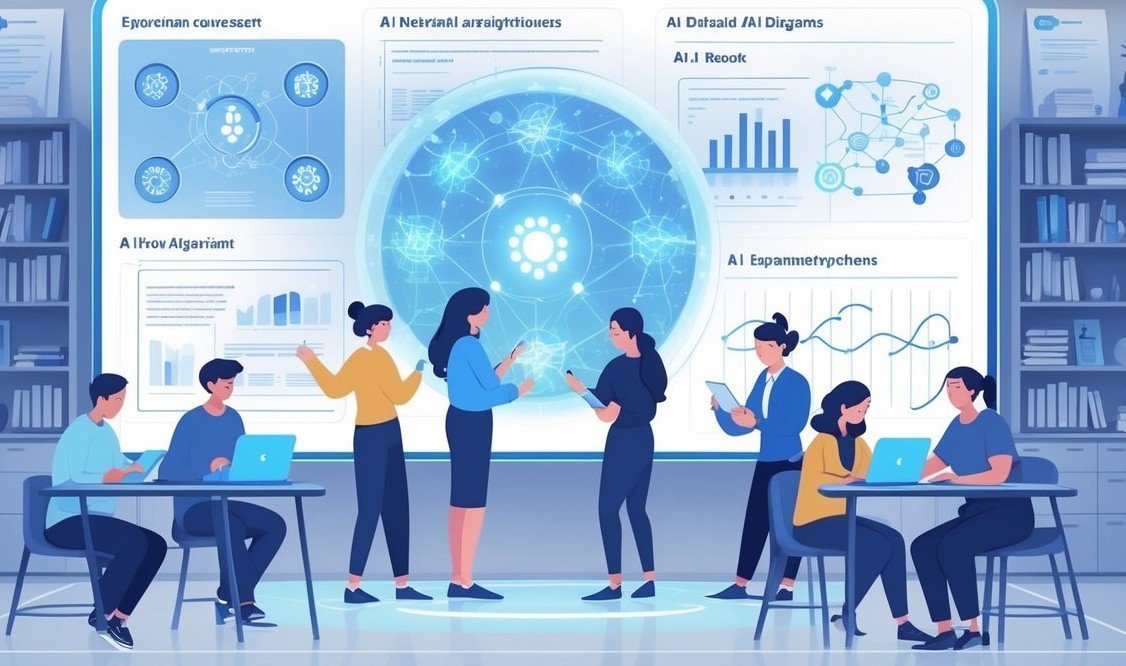

Education is undergoing one of the biggest transformations in history. Artificial intelligence is no longer just a futuristic concept—it has become a practical part of classrooms, online learning platforms, and self-study routines. In 2026, AI tools are helping students learn faster, teachers teach more efficiently, and institutions deliver more personalized education experiences.
Instead of replacing traditional learning, AI is enhancing it by making education more adaptive, interactive, and accessible for everyone.
Table of Contents
Toggle🧠 Personalized Learning for Every Student
One of the most powerful contributions of AI in education is personalized learning. Traditional classrooms often follow a single teaching pace, which may be too fast for some students and too slow for others. AI solves this problem by adapting lessons based on individual performance.
AI-powered platforms analyze:
- Student strengths and weaknesses
- Learning speed
- Quiz performance
- Study habits
Based on this data, systems recommend customized lessons, practice exercises, and revision plans.
This approach ensures that every student receives a learning path tailored to their needs, improving overall understanding and retention.
📚 Smart Tutoring Systems
AI tutors are becoming increasingly popular as a supplement to traditional education. These systems can explain complex topics, answer questions instantly, and provide step-by-step solutions.
Unlike traditional tutoring, AI tutors are available 24/7 and can adjust explanations based on the student’s understanding level.
For example:
- A math problem can be explained in simple steps for beginners
- The same concept can be expanded with advanced theory for higher-level learners
This flexibility makes learning more accessible and less stressful.
✍️ Improved Writing and Content Assistance
AI writing tools are helping students improve essays, assignments, and research papers. These tools assist with grammar correction, sentence structure, clarity, and idea development.
Students can:
- Check spelling and grammar instantly
- Improve writing tone and style
- Generate outlines for essays
- Get suggestions for better vocabulary
This does not replace learning but strengthens writing skills by providing real-time feedback and guidance.
However, responsible use is important so students continue to develop their own critical thinking and creativity.
🎓 Automated Grading and Teacher Support
Teachers spend a large portion of their time grading assignments and managing administrative tasks. AI is helping reduce this workload through automated grading systems.
AI tools can evaluate:
- Multiple-choice tests
- Short answers
- Essay structure and coherence
- Participation and engagement
By automating repetitive tasks, teachers can focus more on teaching, mentoring, and supporting students individually.
This leads to a more balanced and effective education system.
🌐 Language Translation and Accessibility
AI is breaking language barriers in education. Students from different regions can now access the same educational content in their native languages through real-time translation tools.
This is especially important in global online learning platforms where students may come from diverse linguistic backgrounds.
AI also supports students with disabilities by offering:
- Speech-to-text tools
- Text-to-speech systems
- Visual learning aids
- Adaptive learning interfaces
These features make education more inclusive and accessible for everyone.
📊 Data-Driven Learning Insights
AI systems collect and analyze large amounts of learning data. This helps teachers and institutions understand how students are performing and where improvements are needed.
Insights may include:
- Which topics are most difficult for students
- How long students spend on each lesson
- Drop-off points in learning modules
- Overall class performance trends
With this information, educators can adjust teaching methods and improve course design.
This data-driven approach makes education more efficient and targeted.
🧑🏫 AI as a Teacher Assistant
Instead of replacing teachers, AI is becoming a powerful assistant in the classroom. Teachers can use AI tools to:
- Create lesson plans quickly
- Generate quizzes and practice tests
- Organize student data
- Suggest teaching strategies
- Provide additional learning resources
This reduces workload and allows teachers to focus more on creativity, interaction, and student engagement.
🎮 Interactive and Gamified Learning
AI is also making learning more engaging through gamification. Educational apps now use game-like elements such as points, badges, and challenges to motivate students.
AI adjusts difficulty levels in real time, ensuring that students remain challenged but not overwhelmed.
This approach is especially effective for younger learners, as it turns education into an enjoyable experience rather than a stressful task.
🧩 Virtual Classrooms and AI Simulation
Virtual classrooms powered by AI are becoming more advanced. Students can now attend interactive online classes with real-time feedback, virtual whiteboards, and AI-generated explanations.
In science and technical subjects, AI simulations allow students to:
- Conduct virtual experiments
- Explore 3D models
- Visualize complex concepts
This makes abstract topics easier to understand and more engaging.
⚠️ Challenges of Using AI in Education
Despite its benefits, AI in education also comes with challenges:
- Over-reliance on technology
- Risk of academic dishonesty
- Privacy concerns with student data
- Unequal access to digital tools
- Need for teacher training
These issues highlight the importance of balanced and responsible AI usage in education systems.
🚀 The Future of AI in Education
The future of education will likely be a hybrid model where human teachers and AI systems work together. AI will handle repetitive tasks and personalization, while teachers focus on mentorship, creativity, and emotional development.
We can expect:
- Fully adaptive learning platforms
- AI-powered career guidance systems
- Real-time global classrooms
- Smarter educational content creation
- Lifelong personalized learning paths
Education will become more flexible, accessible, and student-centered than ever before.
🌟 Final Thoughts
AI tools are reshaping modern education by making learning more personalized, efficient, and inclusive. From smart tutoring systems to automated grading and interactive classrooms, AI is supporting both students and teachers in powerful ways.
However, the key to success lies in balance. When used responsibly, AI does not replace education—it enhances it, making learning more meaningful and effective for everyone.
